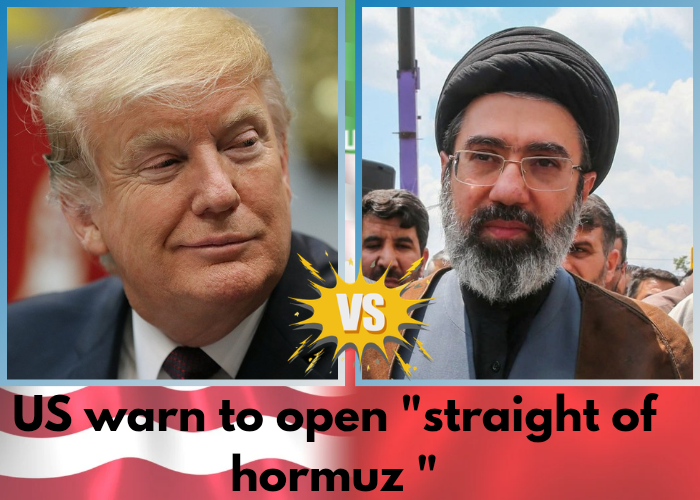
Tensions in the Middle East have reached a boiling point. Recent threats from Donald Trump and Iran’s defiant stance have brought the world to what looks like a geopolitical ‘Endgame’. in this post,the various dimensions of this crisis and its potential impact on the world, including India, are analyzed.
Donald Trump’s 24-Hour Deadline
U.S. President Donald Trump has issued a direct warning to Iran: if the Strait of Hormuz is not reopened, the U.S. will destroy all of Iran’s power plants and critical infrastructure. Trump has set a deadline for this by the evening of April 7.
“They’re going to have no bridges, they’re going to have no power plants… stone ages, yeah,” Trump stated, emphasizing the severity of the potential strike]. This “stone age” threat comes as the 24-hour clock continues to tick toward a critical deadline.
On the other hand, Iran’s new leadership is refusing to back down. Mohammad Baqer Qalibaf, the Speaker of the Iranian Parliament, retaliated by stating that America’s actions will create a “living hell” for their own families.
Why is the Strait of Hormuz the World’s ‘Lifeline’?
The Strait of Hormuz is the world’s most important oil transit route.
- Energy Crisis: Approximately 20% of the world’s oil supply and 20% of its liquefied natural gas (LNG) pass through this narrow waterway.
- Asian Dependency: Countries like India, China, Japan, and South Korea import more than 50% of their energy needs from this region.
- Price Surge: If this route is blocked, Brent Crude prices could soar to $190 per barrel, surpassing the previous record set in 2008.
live update on IRAN-ISRAIL-US WAR.
Iran’s Counter-Strategy: Beyond Oil to Tech and Banking.
According to experts, if the U.S. attacks Iran’s power plants, Iran’s response will not just be military. According experts,Iran could target the following sectors:
- Energy Infrastructure: Qatar’s Ras Laffan (the world’s largest LNG plant) and Saudi Arabia’s Ras Tanura petrochemical complex.
- Tech and AI: Regional headquarters and data centers for Google, Meta, and Microsoft located in Dubai.
- Banking Sector: U.S. banks operating in Gulf countries, such as JP Morgan and Citibank.
The Impact on India:
Even though India is not a direct party to this conflict, the effects will be felt from Indian kitchens to its GDP:
- Inflation: A shortage of fertilizers will lead to a spike in agricultural prices. Urea prices have already seen a 35% increase.
- Medicine Shortage: A lack of petrochemical products will disrupt the pharmaceutical supply chain, affecting the production of generic medicines.
- Economic Slowdown: By 2026, global growth rates could drop to 1.4%.
Negotiations and Strategic Stakes:
Despite the aggressive posturing, Trump indicated that active negotiations are underway. The primary demand from the U.S. remains the immediate reopening of international shipping lanes in the Strait of Hormuz.
- U.S. Position: Seeking a deal to secure global energy supply chains.
- Iranian Stance: While Trump claims there is an “active, willing participant” on the other side, the bombing of civilian infrastructure like bridges near Tehran has already begun.
Summary of the post.
The Iran-Israel-US conflict is no longer just a regional issue. It is a massive threat to global food security, energy, and the economy. If negotiations do not succeed in time, the world may face a severe economic crisis.