
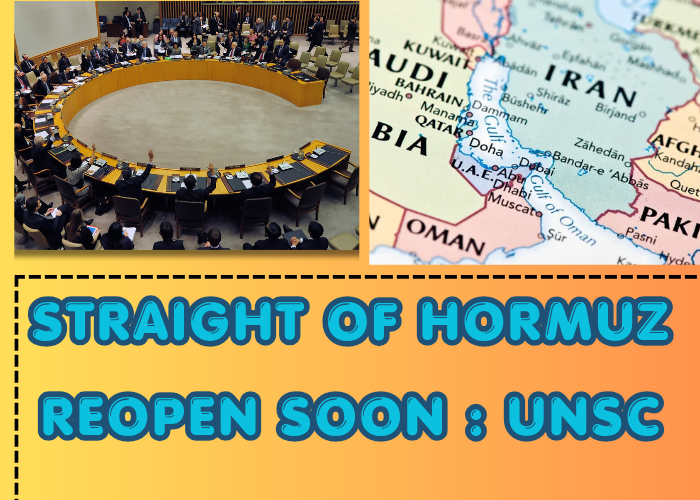
The United Nations Security Council has intensified diplomatic efforts to ensure the reopening and secure navigation of the Strait of Hormuz, one of the world’s most critical maritime chokepoints. Rising geopolitical tensions and disruptions in shipping routes have triggered global concern, prompting urgent discussions among world powers about maintaining stability in international waters.
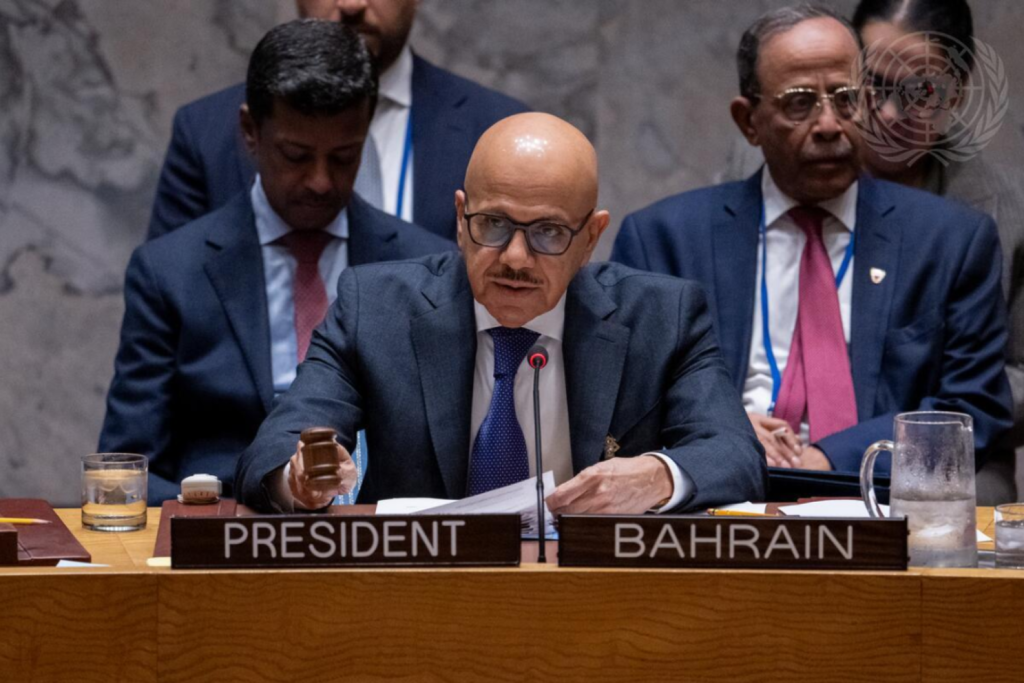
With oil prices hovering at record highs and global supply chains for LNG and fertilizers disrupted, a new resolution led by Bahrain seeks to authorize “all defensive means” to restore navigation in this vital maritime chokepoint.
The Strategic Importance of the Strait of Hormuz
The strategic importance of the Strait of Hormuz cannot be overstated. Major oil-exporting countries including Saudi Arabia, Iran, Iraq, Kuwait, and the United Arab Emirates rely heavily on this maritime route to transport crude oil and liquified natural gas to global markets.
Asian economies such as India, China, and Japan are particularly vulnerable because they depend heavily on energy imports passing through the strait.
The current blockade, a direct result of the escalating Iran-Israel conflict, has effectively strangled this route. Major shipping firms like Maersk and Hapag-Lloyd have suspended operations, leading to a systemic collapse of the Gulf Cooperation Council (GCC) economic model and causing energy prices to surge past $110 per barrel.
UN Security Council’s Diplomatic Initiative
During emergency sessions, Security Council members emphasized freedom of navigation under international law. The Council called for restraint among regional actors and encouraged dialogue to reduce tensions threatening commercial shipping.
Permanent members including the United States, United Kingdom, France, Russia, and China expressed concern over the economic consequences of continued instability.
The Council’s proposed measures include:
- Diplomatic negotiations between regional rivals
- Maritime security coordination to protect commercial vessels
- Monitoring mechanisms to prevent escalation
- Encouraging compliance with international maritime law.
These steps aim to reopen the Strait safely while avoiding military confrontation.
Economic Consequences of a Continued Blockade
The International Energy Agency has characterized this as the “largest supply disruption in the history of the global oil market.” The impact extends far beyond the gas pump:
- Inflation: Skyrocketing energy costs are driving global inflation, forcing central banks to reconsider interest rate cuts.
- Food Security: The blockade has halted shipments of fertilizers and essential commodities, threatening food stability in developing regions.
- Logistics: Suez Canal traffic has been rerouted around Africa’s Cape of Good Hope, adding weeks to transit times and doubling shipping costs.
Geopolitical Deadlock: The Veto Power Struggle.
Despite the economic urgency, the resolution faces “tall odds” at the UN headquarters in New York. The council’s five permanent members (P5) are sharply divided:
- The United States & UK: Strongly support the resolution. President Trump has stated that while U.S. forces will continue to hit Iranian infrastructure “extremely hard,” other nations must also take responsibility for securing their own energy interests in the Strait.
- France: Initially skeptical of military intervention, France has shown signs of support for the “defensive” wording, provided it does not lead to an uncontrollable regional war.
- China & Russia: Both nations hold veto power and have voiced firm opposition. Chinese Ambassador Fu Cong warned that authorizing force could “legitimize the unlawful use of force” and escalate the conflict further. Russia maintains that the crisis requires a political settlement rather than a military mandate.
UNSC verdict:Diplomacy or Escalation?
The UN vote at 11:00 AM EDT today represents a crossroads for international law. If the resolution passes, we may see a massive multinational naval coalition enter the Gulf to escort tankers. If it is vetoed, the global economy remains at the mercy of the ongoing war, with no clear end in sight.
While Iran denies that ceasefire negotiations are occurring, the international community is looking for any diplomatic opening to prevent a total regional collapse. For now, the world waits on the UN Security Council to see if collective security can prevail over geopolitical rivalry.